
The Supreme Court on Friday sought replies of the West Bengal and Tamil Nadu governments on a plea of the producers of The Kerala Story challenging the ban in the two states.

The most important step is delivering what is needed -- a fairer IPO pricing, notes Debashis Basu.

India's economic image is not affected due to Adani Group's recent decision to pull out Rs 20,000 crore FPO (follow-on public offers) amid allegations of financial wrongdoings, Finance Minister Nirmala Sitharaman said on Saturday.

The National Company Law Appellate Tribunal has directed the new board of the debt-ridden IL&FS Group to distribute Rs 16,361 crore of cash and InvIT units available across the Group to its creditors on pro-rata basis. The interim distribution award of Rs 16,361 crore includes Rs 11,296 crore in cash and Rs 5,065 crore in InvIT units (Infrastructure Investment Trusts) and a majority of this is to be distributed to the creditors of three large group firms -- IL&FS, IFIN and ITNL. "The interim distribution shall be confined only to the entities as reflected in Annexure-6 except those excluded and for the amount of Rs 16,361 crores i.e Rs 11,296 crore of cash and Rs 5,065 crores of InvIT Units," said an order by a two-member NCLAT bench headed by Chairperson Justice Ashok Bhushan.

Here's how EPF stacks against other investment options

The bank wanted to run a background check on some Indian promoters.

No respite in sight as not many big deals, initial public offerings in pipeline.

Three takeaways for individuals living in a global society today, where misinformation and disinformation are rife.

Gaurav Mehta, one of 100 'Young Global Leaders', is tapping entrepreneurs inside rural Indians.

'Professors can teach even when they are 90 because they don't lose their skill with words. Go deeper and there's spirituality in it.'

To curb mis-selling of policies and rationalise commissions, radical changes have been proposed to help investors.

Vodafone Idea (Vi) is in continuous talks with network vendors to finalise its 5G rollout plans, Vodafone Idea CEO Akshaya Moondra said. "We are in early stages of 5G deployment. "5G is an important development and we are keeping our eyes on it," Moondra said on Wednesday in a post-result analyst call. Already five months behind rivals Jio and Airtel in the 5G race, Vi's efforts will be on the deployment of 5G in target geographies.

"What would be your advice for investors?" 'Keep it simple. Don't panic.'

It has been a slow 2022 thus far for the primary markets. In the last 8 months, only 16 companies have raised Rs 40,311 crore via the initial public offer (IPO) route, data from PRIME Database suggests. In comparison, 63 companies had raised a cumulative Rs 1.18 trillion via the IPO route in 2021. A large part of the funds raised in 2022 were on account of the two IPOs - Life Insurance Corporation of India (LIC) and logistics firm Delhivery - that raised a total of over Rs 26,000 crore between themselves.

To further strengthen the supervision on non-banking entities (NBFCs), the Reserve Bank on Tuesday issued revised guidelines on a Prompt Corrective Action (PCA) framework for such companies, excluding government-owned ones, effective from October 1, 2022, on the lines of what it had introduced for banks in 2002. The RBI came up with stricter supervisory norms under the PCA framework for banks after their bad loans mounted and balance-sheets bled badly. This involved restricting them from fresh lending, brand opening and, hiring, among others. The RBI said the revised PCA framework is also applicable to all deposit-taking non-banking financial companies (NBFCs), all non-deposit taking NBFCs in the middle, upper and top layers, including investment and credit companies, core investment companies, infrastructure debt funds, infrastructure finance companies and microfinance institutions.

Billionaire Gautam Adani's son Karan will helm the cement firms his group has acquired to become India's second largest cement player and extend his burgeoning empire that spans from ports and energy to airports and telecom.
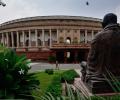
With Sebi telling the Supreme Court that it was not investigating the Adani group since 2016, the Congress on Monday cited a Union minister's reply in the Lok Sabha to challenge the claim and asked whether Parliament was misled or the market regulator was "fast asleep" as investors were "duped".

Foxconn means serious business in India. Its delegation to India was led by its Chairman Young Liu who met Prime Minister Narendra Modi.

The success of recent IPOs and the stability in the secondary market are propelling many firms and investment bankers to remove their IPO plans.

Chanda Kochhar, who was arrested for a cash-for-loan scam on Friday, was once a powerful banker and instrumental in making ICICI Bank the country's biggest private sector lender. Kochhar, a regular feature on Forbes top global honchos lists, was arrested by the Central Bureau of Investigation (CBI) along with her husband Deepak Kochhar in connection with alleged cheating and irregularities in loans sanctioned by ICICI Bank to Videocon Group companies. Kochhars were called to the agency headquarters and arrested after a brief questioning session. Her chapter at ICICI Bank ended abruptly in 2018 when the board of directors approved a request from Kochhar to seek early retirement following allegation of corruption and quid pro-quo while extending loans to the now bankrupt Videocon Industries.
Markets watchdog Sebi on Tuesday decided to tighten norms for utilisation of IPO proceeds by companies, introduce special situation funds to invest only in stressed assets and amend various regulations, including those on mutual funds and settlement proceedings. The board of Sebi, which met on Tuesday, also gave its nod for amending Foreign Portfolio Investor (FPI) regulations and introducing a provision for appointment or re-appointment of any person, including as a managing director or a whole time director or a manager, who was earlier rejected by the shareholders at a general meeting. Once the amended norms are in place, such appointments or re-appointments can only be done with the prior approval of the shareholders.

'We will take tough calls where needed in the interest of doing what is right.'

The government has not set up any committee to probe allegations a US short seller labelled against the Adani Group, but stock market regulator SEBI is investigating market allegations against the group, the Lok Sabha was informed on Monday. A separate investigation into imports of Indonesian coal by the conglomerate hasn't reached finality, Minister of State for Finance Pankaj Chaudhary said. Lok Sabha saw several questions being put by MPs to the government on the Adani issue, which were replied through written responses by the minister.

We as customers have to be conscious and careful to sidestep numerous types of frauds made possible under a mindless shift to a digital ecosystem without customer-redress procedures, warns Debashis Basu.
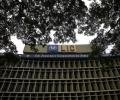
Initial public offering (IPO)-bound Life Insurance Corporation (LIC) of India's assets under management (AUM) increased to Rs 38 trillion as of September 2021, compared with Rs 37 trillion as of March 2021, said sources in the know. Its AUM is almost 3x the AUM of all the private life insurers in the country and over 15x more than the AUM of the second largest life insurer, SBI Life, as of September 2021. SBI Life's AUM was approximately Rs 2.4 trillion as of September 2021, said sources.

Stock market investments are always said to involve risks and people who made big fortunes often made headlines as scamsters, leading to Dalal Street always being looked at with suspicion, but Rakesh Jhunjhunwala was broadly an exception. Jhunjhunwala, a partner at RARE Enterprises, who rose to amass a $5.8 billion fortune and earn the tag of the country's biggest individual investor, leaves behind a relatively cleaner slate, as was seen in the most common description for him -- 'India's own Warren Buffett'. Unlike names like Harshad Mehta and Ketan Parekh, whose rise in fortunes in post-liberalised India was tainted with scam links, the newest 'Big Bull' in the more-regulated market had lesser baggage on this front.

Private equity firm Carlyle Group and associates will acquire a controlling stake of over 50 per cent in PNB Housing Finance by investing in the Rs 4,000 crore preferential issue of equity and warrants of the Delhi-based mortgage lender. After the proposed transactions, expected to be completed by January 1, 2022, Carlyle will also have the right to nominate the chairperson of PNB Housing Finance (PNB HF). This right will continue as long as it holds at least 40 per cent of the share capital on a fully diluted basis.

India's role as a leader of the global south may require it to give up its ambition to serve as a bridge between the warring halves of the international community, points out Mihir S Sharma.

The Securities Appellate Tribunal has stayed a Sebi order that barred Franklin Templeton's Asia Pacific head Vivek Kudva and his wife Roopa from the securities market for one year.

While investing in PPF, investors must remember to put in the money at the right time to maximise the return they earn from it.

The CBI today registered three FIRs and a preliminary enquiry to probe alleged irregularities in Indian Airlines-Air India merger and purchase of 111 aircraft, leasing of planes and giving up of profit-making routes by Air India, causing a loss of thousands of crore of rupees.

Education finance is a complex and dynamic sector. There are too many variables -- the course, the calibre of students, the universities, and the job prospects once the course is over, notes Tamal Bandyopadhyay.

IPL franchises are trying to convince six England players to quit international cricket with multi-million pound deals.

Opposition parties on Thursday agreed to jointly raise the issue of allegations of fraud against the Adani Group in Parliament but were yet to agree on the mode of inquiry into the Gujarat-based corporate major.

The government has appointed 10 merchant bankers including Goldman Sachs (India) Securities, Citigroup Global Markets India, and Nomura Financial Advisory and Securities India to manage the mega initial public offering of country's largest insurer LIC. Other selected bankers include SBI Capital Market, JM Financial, Axis Capital, BofA Securities, JP Morgan India, ICICI Securities, and Kotak Mahindra Capital Co Ltd, a circular on the divestment department website said. "Government has finalised the book running lead managers and some other advisors for the IPO of LIC," DIPAM Secretary Tuhin Kanta Pandey tweeted. The divestment department had invited applications for the appointment of merchant bankers on July 15.

Two key depts in ministry cold to rationale for one; postal dept says it's more eligible than IDFC or Bandhan, feels 'strong lobby' scuttling its plans.

A fresh PIL was filed on Thursday in the Supreme Court seeking a probe by multiple central government agencies under the supervision of a panel or a former apex court judge against the Adani Group of companies following allegations of fraud and share price manipulation made by the US-based Hindenburg Research.

'Which fund manager in the world will put money into a company that hasn't filed its annual account?'

Another sobering number is that the total Chinese investment in India in the past 10 years amounts to $400 million.

Merely bringing down the government stake below 51% may not find any taker for the PSBs. The government must bring down its holding to at least 26%, recommends Tamal Bandyopadhyay.
